Sunday, 26 February 2012

gulling at Newhaven

among the gazillions of wires, adaptors and things on my floor at the moment, I can't find the one I need to download photos from my camera, so our dear readers will have to make do with me using one of our other photographers far better images (what a shame I hear you say!)

The bird myself and my Dad went to look for was an adult Iceland Gull, a new age for both of us in the UK. In the end we saw the adult fairly well, if distantly. However, my attention was more drawn to the swathes of Herring Gulls (I'm considering a labotomy for these unhealthy obsessions).

Among the first-winter gulls, there were at least five or six that were noticeably darker and larger- I'm thinking Argentatus for all of them. There was also one pretty hefty third-winter which I got some OK photos of; it had a big, hooked bill and mean, brutish look, and on jizz I'd call it Argentatus. Considering this species is description-worthy I wouldn't submit them.

Spring is also definitely approaching, most Black-headed Gulls seem to be well into their moult, and among the first-winter Herring Gulls were two that have started moulting their head-feathers and nothing else, giving them a marked smithsonianus look. The adult Herrings with pure white heads might have already moulted, but in Seaford I see a good number of birds that never acquire any head-streaking all through the winter, especially among birds that remain on their rooftop nests year-round.

(Herring Gull-© John Bridges)

A first-winter Herring Gull, but not one I'd personally want to try and identify. The presence of intergrades between Argenteus and Argentatus can make identifying some especially complicated, especially from a photo. On Johns website he does have a few that to me look like quite nice Argentatus adults though (including one used by Andrew in a post further down). 


Saturday, 25 February 2012

Kumlien's Gull (larus glaucoides kumlieni) - Hartlepool Headland - February 2012

The following images were taken by Ian Forrest of the 3rd winter Kumlien's Gull that is wintering at Hartlepool Headland in Durham (Cleveland). Some small side notes have been added under some of the images with some comments, a real learning curve for me and a fantastically interesting and educational bird.

(Kumlien's Gull - © Ian Forrest)
Dark shadowing can be seen on the outer webs of P9, P8, and P7 of the outer primaries. 

 (Kumlien's Gull - © Ian Forrest)
Again the dark shadowing can be seen on the outer webs of P9, P8, and P7 of the outer primaries which contrast with the inner primaries. The backwards 'J' shape effect of the dark markings bleeding along the tip of  P9, P8, and P7 onto the inner web of these primaries can be seen here. However it is perhaps easier to see on the next image. Also the darker and more contrasting secondaries can be seen here on this bird,

(Kumlien's Gull - © Ian Forrest)
The dark shadowing on the primaries mentioned above can obviously be seen here. Outer primaries mentioned look particularly dark and contrasting in this image. The dark contrasting secondaries are again obvious here as is the remnants of what looks like a once broad tail band.

Sabine's Gull (larus sabini) - South Shields - 2010

The following photos are of a juvenile Sabine's Gull taken at South Shields in Durham, the bird wandered during its stay going from North Shields Fish Quay in Northumberland to South Shields in Durham. All photos are copyright of Stephen Egglestone and as always are grateful for allowing the blog to use his superb images of this Sabine's Gull.

 (Sabine's Gull - © Stephen Egglestone)
(Sabine's Gull - © Stephen Egglestone)

Friday, 24 February 2012

Iceland Gull (larus glaucoides) - Sunderland - February 2012

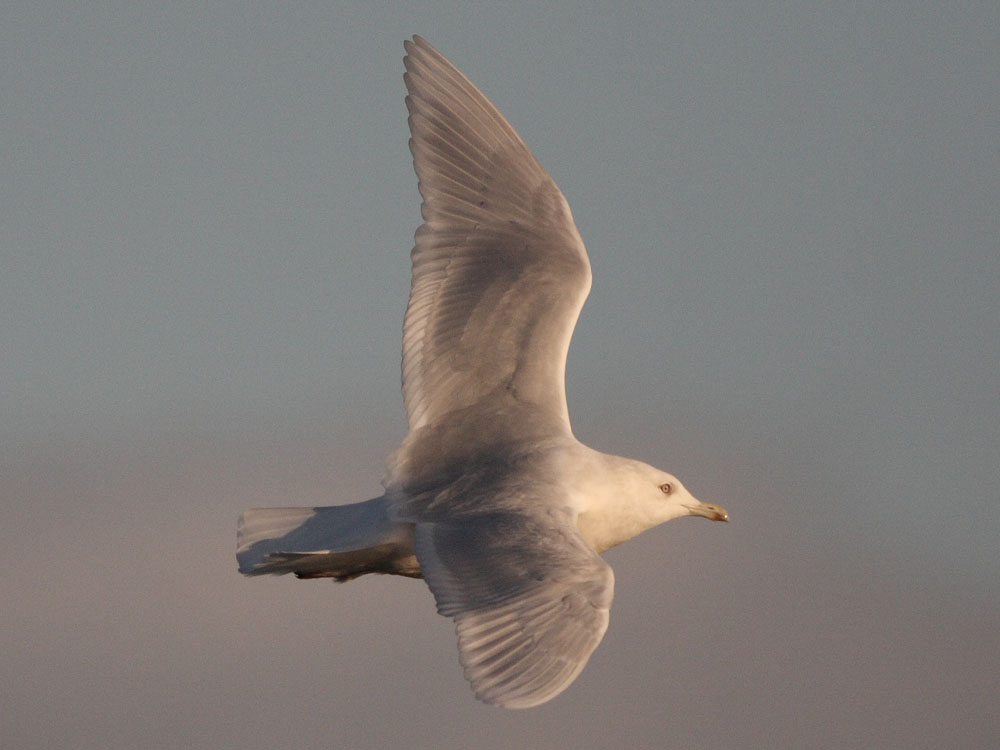
All photos taken by Mark Newsome of an adult Iceland Gull at Roker Pier in County Durham. Many birds noted over here in recent weeks but today only the adult Iceland Gull was noted and it is thought other lingering birds have now moved on.

 (Iceland Gull - © Mark Newsome)

 (Iceland Gull - © Mark Newsome)

(Iceland Gull - © Mark Newsome)

Wednesday, 22 February 2012

Slaty-backed Gull (larus schistisagus)

In 2011 the UK had its first ever record of Slaty-backed Gull, this record was also only the 2nd for the Western Palearctic. Gary Crowder has kindly granted me permission to use his superb images of the species taken in Japan. This is a taster of things to come!

(Slaty-backed Gull - © Gary Crowder)

adult Ring-billed Gull

(Ring-billed Gull- © Michael Booker)

(Ring-billed Gull- © Michael Booker)

(Ring-billed Gull- © Michael Booker)

(Ring-billed Gull- © Michael Booker)

(Ring-billed Gull- © Michael Booker)
some brilliant photos of the regular Gosport adult, thanks to Michael Booker for them. Ring-billed Gulls tend to be given little attention among gulls despite their rarity, but an adult like this is pretty gorgeous in my opinion. The yellow eye and thick bill, with a 'scowling' expression, tend to give them the jizz of a larger gull- when I first got into birds I had no idea this species is actually closely related to Common Gull! 

The bill is a good way of picking Ring-bills out, but should you find a bird not showing it's bill with Common Gulls, they appear longer winged and legged, have a paler mantle, and appear more square-headed with a peak behind the eye. Compared to argenteus Herring Gull they appear smaller but with a similar mantle colour, their yellow legs stand out, and when settled have a more delicate shape, similar to Common Gull

Tuesday, 21 February 2012

Great Black-backed Gull (larus marinus)

Just a mixture of shots of adult Great Black-backed Gulls, all images taken by John Bridges. Images show a fairly typical mantle shade and primary pattern of the largest gull in the world.

 (Great Black-backed Gull - © John Bridges)

 (Great Black-backed Gull - © John Bridges)

(Great Black-backed Gull - © John Bridges)