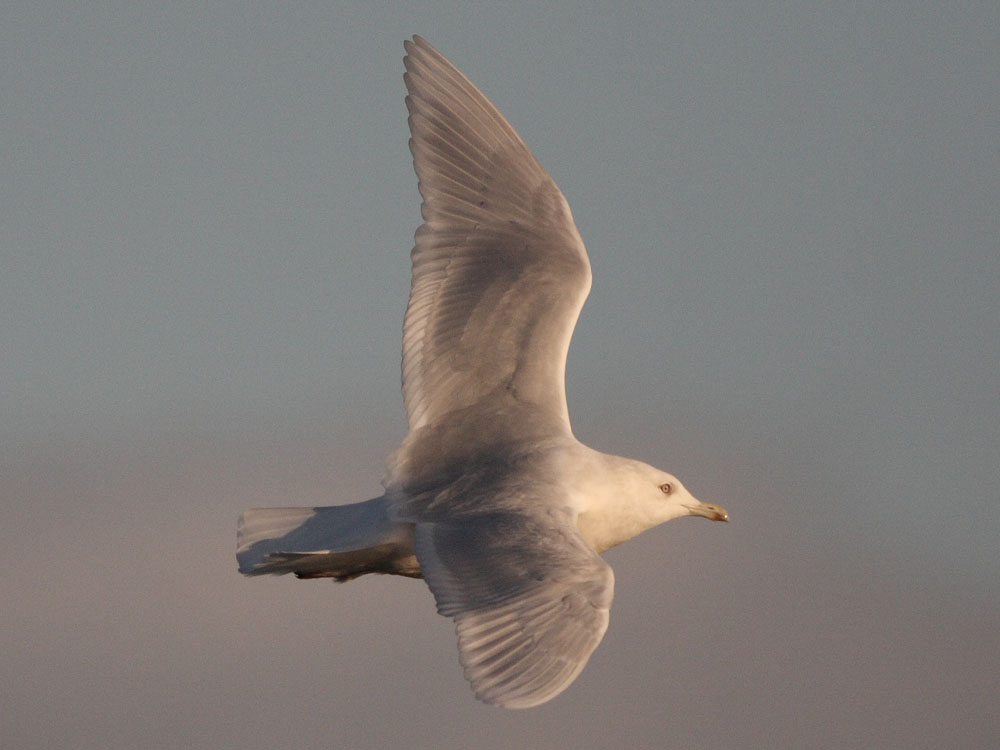
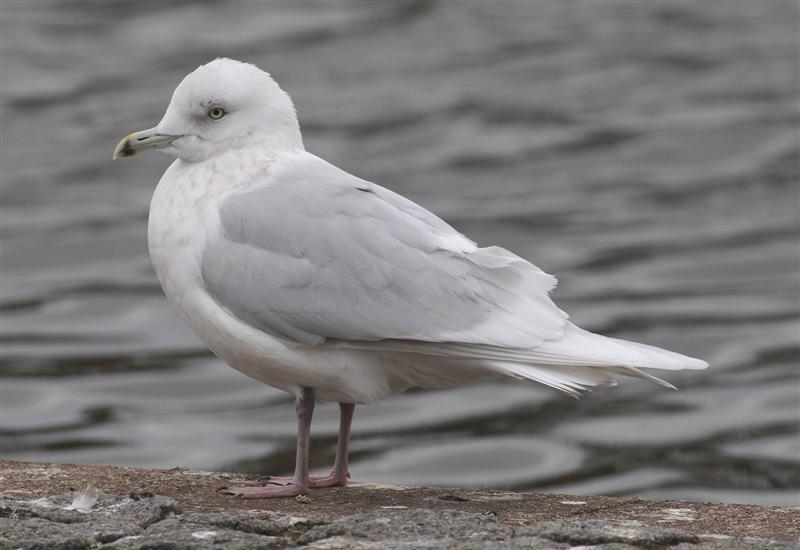
Showing posts with label Iceland Gull. Show all posts

Tuesday, 28 February 2012

March in Gulls-what to look out for

Here's the premise- a brief guides into some of the wonders of the gulling world March will bring. Enjoy!!

Gull Migration
I happen to live near a great sea-watching spot on the South Coast, where on good days in March flocks of the gorgeous Mediterranean Gull stream by. The beginnings of Little Gull migration are also apparent during the month. Other  more common gulls may be noted migrating, including Common and Black-headed. Last year on spring migration, an Iceland Gull was tracked along the Sussex coast. And with our fantastic year of white-wingers I believe that by the end of the month there will be a smaller, secondary peak in the north of the UK, as Glaucous, Iceland and Kumlien's Gulls from further south return north to their breeding grounds.
Sea-watching can be a great opportunity to watch gull migration in action. Mediterranean Gulls are mainly a southern speciality (they occur further north but in nothing like the same numbers) but in the south it's definitely worth looking out for a few among flocks of Black-headed Gulls on reservoirs, landfills and anywhere else a migrating gull would be tempted to stop and feed. The same applies for Little Gulls, though their numbers are greater later in the spring in my experience.
(Mediterranean Gull- © John Bridges)


Gull Moult
By the end of the month adult Black-headed, Little and Mediterranean Gulls will mostly have acquired their full hoods, and adult Common Gull and large white-headed gull species (LWHG) will mostly have lost their winter streaking. The moult of all the juvenile ages of gulls is too bewildering for me to detail fully in this post alone, but for a example lets take Herring Gull;

first winter into second-winter: generally from April-Oct, head first, body second, then mantle, scapulars, coverts and finally primaries
second-winter to second-summer; partially takes place from January to April, including head, most body feathers and scapulars. Coverts begin to moult from mid-may
second into third-winter; generally from April-Oct, as for first into second winter moult


info from 'Gulls of Europe, Asia and North America' by Klaus Malling Olsen and Hans Larsson

I included the two Apr-October moults as, last time I went 'gulling' I saw several first-winter Herring Gulls that had began the moult of their head-feathers, proving not every gull goes by the book and some can moult early. Ageing some gulls can be a challenge at this time of year (though a fun one if you're me!).

Gulls courting
At Rye Harbour, a well-known colony of Mediterranean and Black-headed Gulls, the birds are already starting to arrive, and by the end of March nest-building will be complete (per Barry Yates, warden of Rye Harbour, posting on the Sussex Ornithological Website).
If you live up North, the gulls in your seabird colony are probably the most boring creatures there. But aside from Fulmars, Rock Pipits and the odd pair of Peregrine and Raven, the seabird colonies in SE England consist almost entirely of gulls. Black-legged Kittiwakes have one of their most southerly colonies at Splash Point, right on my doorstep, and it's always great to see them arriving and beginning their courtship, mainly from March onwards.
And finally, though they're almost universally hated, the Herring and Lesser Black-backed Gulls that seemingly nest in almost every city in the country are a seabird colony on a lot of people's doorsteps!

Target Gull Species
MEDITERRANEAN GULL- arrives on breeding grounds, and migrants often appear in good numbers in some areas. The only gulls regularly occurring resident gull species with white primaries, and it's dark black hood, plaintive expression and Eider-like-voice make it a particularly endearing species.
ICELAND GULL- expect a return migration with birds once again concentrated in Northern areas, before their final push towards Greenland.
KUMLIEN'S GULL- the same applies, though they'll be heading for Baffin Island. This is perhaps a chance to connect with one if you haven't already (like me!)
GLAUCOUS GULL- the same as the two above, though they haven't been as numerous as Iceland Gulls this winter
LITTLE GULL-by the end of the month migration of this attractive little species should be beginning, with some in summer plumage. Based on my experience, often seen from sea-watching sites or reservoirs, but can turn up almost anywhere
(Kittiwake-© John Bridges)
KITTIWAKE- look out for this gorgeous gull returning to it's nesting grounds or migrating past sea-watching points

also, keep an eye out for some ridiculous vagrant. warm Southerly winds and high pressure might waft an Audouin's or Slender-billed Gull up if we're really lucky!

Sunday, 26 February 2012

gulling at Newhaven

among the gazillions of wires, adaptors and things on my floor at the moment, I can't find the one I need to download photos from my camera, so our dear readers will have to make do with me using one of our other photographers far better images (what a shame I hear you say!)

The bird myself and my Dad went to look for was an adult Iceland Gull, a new age for both of us in the UK. In the end we saw the adult fairly well, if distantly. However, my attention was more drawn to the swathes of Herring Gulls (I'm considering a labotomy for these unhealthy obsessions).

Among the first-winter gulls, there were at least five or six that were noticeably darker and larger- I'm thinking Argentatus for all of them. There was also one pretty hefty third-winter which I got some OK photos of; it had a big, hooked bill and mean, brutish look, and on jizz I'd call it Argentatus. Considering this species is description-worthy I wouldn't submit them.

Spring is also definitely approaching, most Black-headed Gulls seem to be well into their moult, and among the first-winter Herring Gulls were two that have started moulting their head-feathers and nothing else, giving them a marked smithsonianus look. The adult Herrings with pure white heads might have already moulted, but in Seaford I see a good number of birds that never acquire any head-streaking all through the winter, especially among birds that remain on their rooftop nests year-round.

(Herring Gull-© John Bridges)

A first-winter Herring Gull, but not one I'd personally want to try and identify. The presence of intergrades between Argenteus and Argentatus can make identifying some especially complicated, especially from a photo. On Johns website he does have a few that to me look like quite nice Argentatus adults though (including one used by Andrew in a post further down). 


Friday, 24 February 2012

Iceland Gull (larus glaucoides) - Sunderland - February 2012

All photos taken by Mark Newsome of an adult Iceland Gull at Roker Pier in County Durham. Many birds noted over here in recent weeks but today only the adult Iceland Gull was noted and it is thought other lingering birds have now moved on.

 (Iceland Gull - © Mark Newsome)

 (Iceland Gull - © Mark Newsome)

(Iceland Gull - © Mark Newsome)

Tuesday, 14 February 2012

Iceland Gull (larus glaucoides) - South Sheilds - February 2012

The following photos (unless otherwise stated) are all taken and kindly supplied by Stephen Egglestone.  The following photos were taken at Marine Park in South Shields on Monday (13th) and are of an 4th winter Iceland Gull. The bird appears largely in adult like plumage, however Mark Newsome pointed out that I had failed to realise the dark subterminal band on the bill. This feature puts the bird as a 4th winter rather than an adult. South Shields lies in the recording area of Durham and was made famous in birding terms recently by the occurrence of the UK's first Eastern Crowned Warbler.

(Iceland Gull - © Stephen Egglestone) 
A bird like this can usually leave little doubt on identity, typical size for Iceland Gull; being relatively the same size as surrounding Herring Gulls. All white plumage very evident in a bird like this from both above and below.

 (Iceland Gull - © Stephen Egglestone) 
Mind your step! Showing the translucent effect of secondaries and both inner and outer primaries, clear lack of any grey shading eliminates the possibility of 'standard' Kumlien's Gull. 

(Iceland Gull - © Stephen Egglestone) 
Bit of a stunner or what? Pure white primaries, greenish tinge to bill, small eye creating a 'cute' look rather than 'rough and ready' which is usually more typical of Glaucous Gull. This bird is a classic Iceland Gull in every way. 

Stephen Egglestone's (Steve) personal blog can be found HERE.

Iceland Gulls - Ageing two birds

My thanks to Les Bird for kindly supplying these images, you can see more of them at http://cuckmereousebirdblog.wordpress.com/  These two birds are present at Newhaven Harbour, East Sussex, the photos were taken on 23 January 2012.

(Iceland Gull - © Les Bird 2012)
This bird was aged as a second-winter, but is a pale individual. The light eye and pale bill, with an approximately 30-40% black tip, are good pointers to rule out first winter. The lack of strong patterning also rules out most first-winters, but some very pale ones can also look this bleached, and as mentioned above this bird is paler than the average second-winter. Second-winter birds also typically look slightly more brutish than first-winters, the pale eye giving them an expression more similar to Herring Gull, I find first-winters can have more of a cute, Common Gull-like expression. However, the rounder head and fairly slender, long-winged shape, plus their smaller size by comparison, means a second-winter glauciodes is still a lot less brutish than hyberboreus in any plumage.

(Iceland Gull - © Les Bird 2012)
This bird is an easy first-winter. The ratio of black:pale on the bill is greater than the second-winter above, and the dark eye gives it that cute, docile look reminiscent of Common Gull. The brownish patterning on the mantle, coverts and tertials is typical of first-winter Iceland Gull and, rather than being at the pale end of the glauciodes spectrum, this is a fairly average bird.

Separation from Glaucous is fairly straightforward. The wings look longer, extending beyond the tail, and the bill is shorter, weaker and less hooked than Glaucous. Iceland has a rounder head and larger eyes, with a deep breast and short legs when standing. In flight Iceland is more elegant, handling strong winds as well as a Kittiwake, and is proportionately longer-winged than Glaucous. Seen side-by side, or with other gulls, Iceland is normally slightly smaller than Herring Gull, while Glaucous is larger than Herring, almost approaching the size of a Great Black-back Gull.

And if you want to separate these two from Kumlien's, the flight shots of the second-winter bird show no grey colouring in the primaries, and the first-winter bird has both a bi-coloured bill and very pale primaries. This should probably rule out about 99% of the hybrid swarm, but please don't ask me to write about the 1% that are inseparable from Ice Gull, I still enjoy gulls at the moment!